
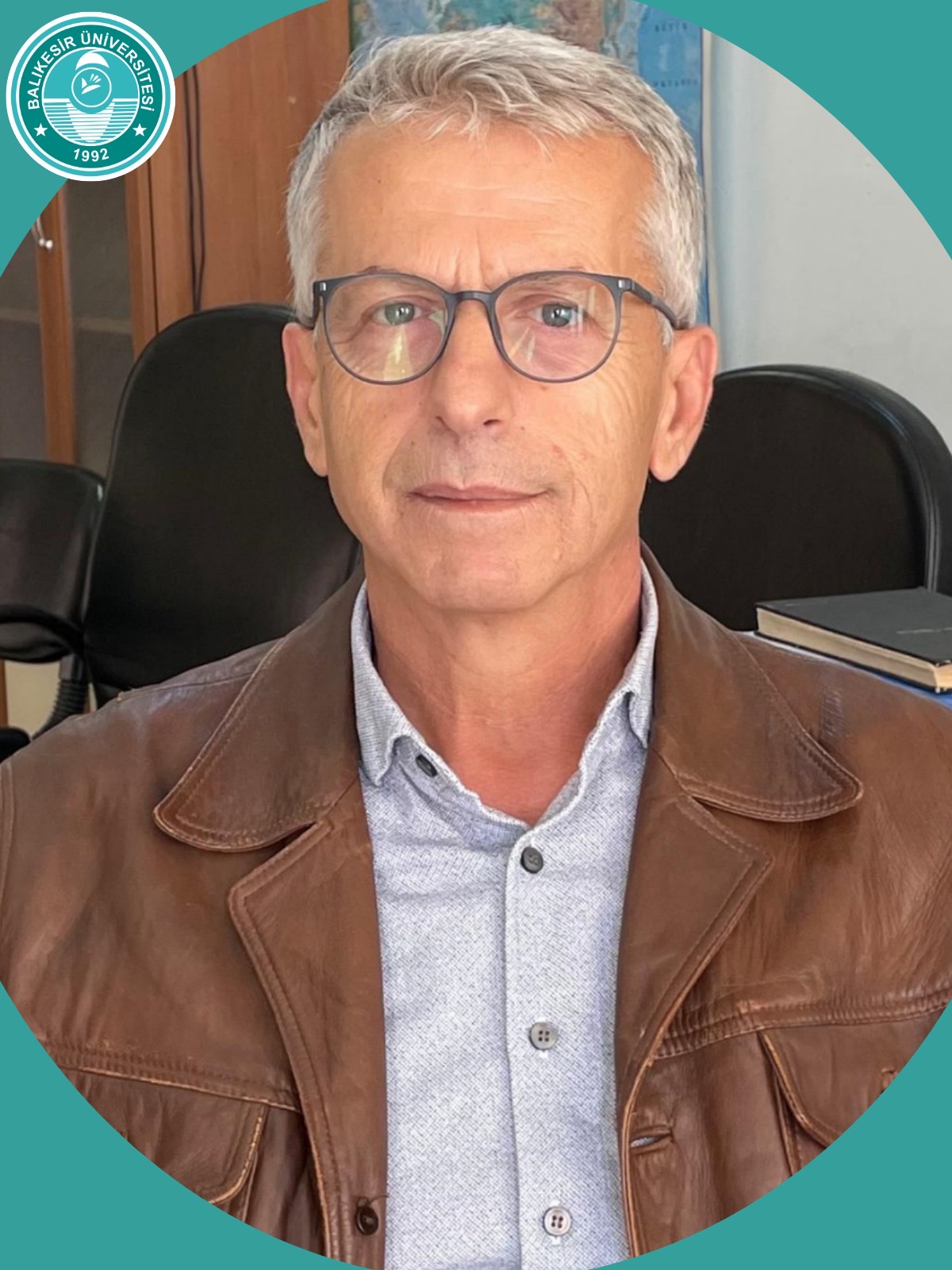
Geography as a discipline requires an interdisciplinary perspective aimed at understanding and explaining both the dynamics of the natural environment and human–environment relations. With this understanding, the Department of Geography at Balıkesir University, Faculty of Arts and Sciences, has adopted as its fundamental goal not only to equip our students with knowledge, but also to educate them as individuals who place scientific thinking at the center of their learning and who develop strong skills of curiosity and inquiry. This educational vision carries the responsibility of training research-oriented graduates with knowledge and competencies that are valid both nationally and globally.
Today, the deepening of environmental problems, climate change, rapid urbanization, migration movements, and the sustainable management of resources further increase the importance of the geography discipline. In this context, geography education is not merely a theoretical field of knowledge; it is also a powerful system of thinking that enables us to make sense of the world we live in, analyze spatial processes, and develop scientifically grounded recommendations for these processes. Our department aims to instill this approach in our students and to educate them as individuals with critical thinking and problem-solving skills.
As the Department of Geography, our educational approach is oriented toward continuously supporting the academic development of our students. While our course contents cover fundamental geographical topics such as natural systems, human geography, regional development, environmental interactions, and spatial analysis, they also provide students with the opportunity to actively use contemporary geographical technologies such as Geographic Information Systems (GIS), remote sensing, spatial statistics, and field studies. These interdisciplinary applications strengthen our students’ analytical thinking skills and increase their motivation to produce scientific projects.
We do not limit our efforts to classroom-based instruction alone. In order to enrich the learning process, we prioritize applied learning opportunities in our courses such as GIS applications, mapping, fieldwork, and contemporary geographical analysis techniques. In this regard, our physical geography and GIS laboratories are equipped with modern infrastructure where students can collect and process field data and conduct analyses. These opportunities play a significant role in transforming theoretical knowledge into practice and reinforce our students’ scientific competencies. Moreover, through regularly organized technical trainings and practice-oriented course content, our students gain strong qualifications that they can utilize in professional life and academic processes after graduation.
Our educational approach also aims to create an atmosphere that supports the social and professional development of our students. We encourage our students to participate in scientific events, seminars, congresses, and various academic organizations; and we strive to build an academic environment where they can express themselves, present research, and follow current debates within the discipline. This process increases students’ self-confidence while also contributing to the strengthening of their professional identity.
The academic advising system enables our students to carry out their academic planning under strong guidance. Our academic staff maintain close communication with students and create an educational environment that helps reveal their strengths and encourages their participation in research processes. In this way, we build a dynamic learning culture where students actively participate rather than merely receiving information. Guiding students in the fields they are interested in, supporting their career planning, and shaping their academic goals are among the key outcomes of this system.
Our research activities constitute an important component that concretizes our department’s academic vision. Projects carried out in various fields such as physical geography, human and economic geography, the geography of Türkiye, regional geography, and GIS enable both undergraduate and graduate students to actively participate in research processes. Our faculty members contribute to scientific knowledge through articles published in international peer-reviewed journals, conference papers, and interdisciplinary studies. This productive research environment allows our students to interact directly with the scientific literature and motivates them toward an academic career. In addition, cultivating a research culture at an early stage supports students in acquiring fundamental scientific skills such as project writing, data collection, analysis, and reporting results.
Developing international collaborations is a strategic priority in terms of increasing the quality of education and research. Our academic staff actively follow opportunities for student exchange programs, joint projects, and participation in scientific events by establishing dialogue with universities and research networks abroad. Such collaborations help integrate our department with developments in the global geography field while contributing to equipping our students with knowledge and experience that will enable them to compete internationally. In addition, through various exchange programs—especially Erasmus+—our students gain academic experience in different countries, engage in cultural interaction, and broaden their horizons, which constitutes an important achievement for our department.
In conclusion, the Department of Geography at Balıkesir University is an academic institution that aims to educate individuals who add value to the discipline of geography through its strong academic staff, student-centered educational approach, innovative teaching methods, and international vision. Seeing our graduates take active roles in academia, the public sector, and the private sector after graduation is an indicator of our department’s sustainable success goals. As a department that values transforming the multidimensional perspective offered by geography into social benefit, we will continue to move forward with confidence and to continuously enhance quality in education, teaching, and research.
Prof. Dr. Abdullah KÖSE